Q&A: Winter gardening tasks

Q: Is there any outdoor garden task this time of year that I may be forgetting to do? I’ve foregone a fall clean-up for the benefit of overwintering wildlife, and the lawn and veggie garden are “asleep” for the season.

A: There are a few things that are good to accomplish during the dormant season. Yard tools like pruners, loppers, shovels, spades, and mower blades are best stored clean, sharpened, and oiled. There may be local businesses that offer sharpening services, but you can also do it yourself with a metal file or sharpening stone or rod.

Ideally, sharpen mower blades annually so the turf doesn’t have the added stress of ragged, torn leaf blades which can be more vulnerable to infection. A steel wool scrubber or a wad of sandpaper can take off early stages of rust and caked-on sap before you focus on the blades of pruning tools and shovels. Good-quality hand pruners can usually be disassembled for easier maintenance, and lightly wiping with oil afterwards helps lubricate the metal and resist rust. Linseed oil (or vegetable oil in a pinch) can be rubbed into wooden tool handles to protect them from aging.

Check on the location of pesticide containers and protect them from extreme temperatures (including freezing). Always store them away from human and animal food and well-secured from children and pets. Products you rarely use should be dated (if you recall when you bought or opened them) since they may only have a useful shelf life of a couple of years. Old pesticides can be disposed of by looking for household hazardous waste collection sites near you.

If you have staked any new plantings, check their ties to make sure the plants still have wiggle-room and bark isn’t being abraded. Stakes that have been in place for six to twelve months can be removed; they’ve either done their job by now or weren’t working in the first place. (Staking is actually not often needed, but at the very least it’s key to let a staked plant’s trunk sway in the breeze so stabilizing root growth and trunk thickening are stimulated.)

Similarly, if you left ID tags tied to any plants, remove them and any other plastic or elastic nursery tags before they damage the stems. Otherwise, any material that gets embedded in expanding growth will be impossible to remove and could cause branch decline in the future if it interferes with sap flow. Alternatively, tags may disintegrate over time and fall off, which means you’ll have lost your plant name. Tags will be easier to spot now on deciduous plants. Keep a record of the plant ID another way – a garden diagram or journal, or written on a stake at the plant’s base – as variety-specific features might impact care advice or future troubleshooting.

Lastly, if you’re overwintering hardy plants in containers, consider using “pot feet” or “pot risers” to raise the pot’s base off decking or pavement by an inch or two. This lets excess moisture clear the drainage holes so it doesn’t freeze into an ice dam, which would risk flooding roots. Any sturdy material where you can find several pieces the same height would suffice, but you could also purchase them in an array of materials, often in packs of three or four “feet” per pot.

By Miri Talabac, Horticulturist, University of Maryland Extension Home & Garden Information Center. Miri writes the Garden Q&A for The Baltimore Sun. Read additional articles by Miri.

Have a plant or insect question? The University of Maryland Extension has answers! Send your questions and photos to Ask Extension.

An introduction to gardening under lights

This is the first article in a four-part series about the ins and outs of gardening under lights, both for newcomers curious about a different way to grow plants and for more experienced growers who want to build on their understanding of lighting options. Read on for the second, third, and fourth parts of the series.

plants growing under an LED light indoors
A variety of plants growing under an LED light indoors. Photo: Miri Talabac

Why use lights for plants?

It’s sensible to think, “why provide artificial light for indoor plants? Isn’t natural window light enough?” After all, natural light is certainly what the plants get when growing outside. If you’re fortunate and have sun-soaked windows in your home, you may have little need for artificial lighting. Anyone who has insufficient window light or who otherwise can’t utilize their windows for growing plants, though, would benefit from giving their plants brighter conditions.

We’ll address this in more detail in upcoming posts, but light levels play a significant role in keeping plants healthy, vigorous, and looking their best. Plant lights give you more control over this aspect of plant care.

Who benefits from using plant lights?

Anyone who doesn’t have ideal natural-light conditions for their plants would benefit from using plant lights (also called “grow lights”). You don’t have to be a tropical plant aficionado to make use of them, and anyone with an available power outlet can try it. Setups can be as simple or as complex as you’d like. Seed-starting enthusiasts can produce more robust seedlings, and anyone trying to overwinter a lemon tree, some herbs, an aloe, or patio tropicals could have more vigorous plants if their winter slog could be brightened with some extra light.

Continue reading →

Q&A: Can you recommend plants that provide food for birds?

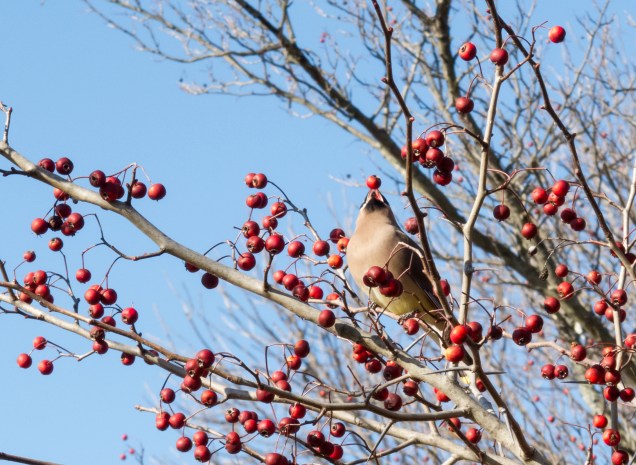
Cedar Waxwing dining on a Green Hawthorn berry. Photo: Miri Talabac

Q: This summer’s mysterious bird illness has me thinking…I’ve become more interested in birds during the past two years and would like to attract them to my yard with plants. Are there favored recommendations?

A: Bird-attracting landscaping definitely beats out bird feeders as the preferable way to bring these beauties into yards for easier viewing as a safer environment than a communal feeder. (While you’re at it, look into ways to discourage window strikes since plants, like feeders, could increase encounters with glass.)

Plant recommendations are going to be incredibly varied because the diet of birds is so varied, both across species and throughout the year. Site conditions in your garden will narrow down what may be an overwhelming list of choices. Here are some general tips:

  • Plant as much variety for which you have room.
  • Plant to provide food for insects and the birds will follow.
  • When looking at berry or seed production, consider productivity for each season.
  • Try to focus on native plants only, since birds will deposit their seeds beyond your landscape.

To pick a timely category – late-ripening berries – there are some notably popular species. Highly-ranked contenders for both resident and southbound migrant birds include Viburnums, Dogwoods (trees and shrubs), Spicebush, Virginia Creeper, Eastern Redcedar, Magnolia, Black Tupelo, Hackberry, Sassafras, Bayberry, Sumac, Hollies, and Hawthorn.

Cornell’s All About Birds web library plus local Audubon Societies are good resources for more thorough information on individual species diet, habitat preferences, and plant suggestions for both foraging and nesting.

By Miri Talabac, Horticulturist, University of Maryland Extension Home & Garden Information Center. Miri writes the Garden Q&A for The Baltimore Sun.

Have a plant or insect question? University of Maryland Extension has answers! Send your questions and photos to Ask Extension.